
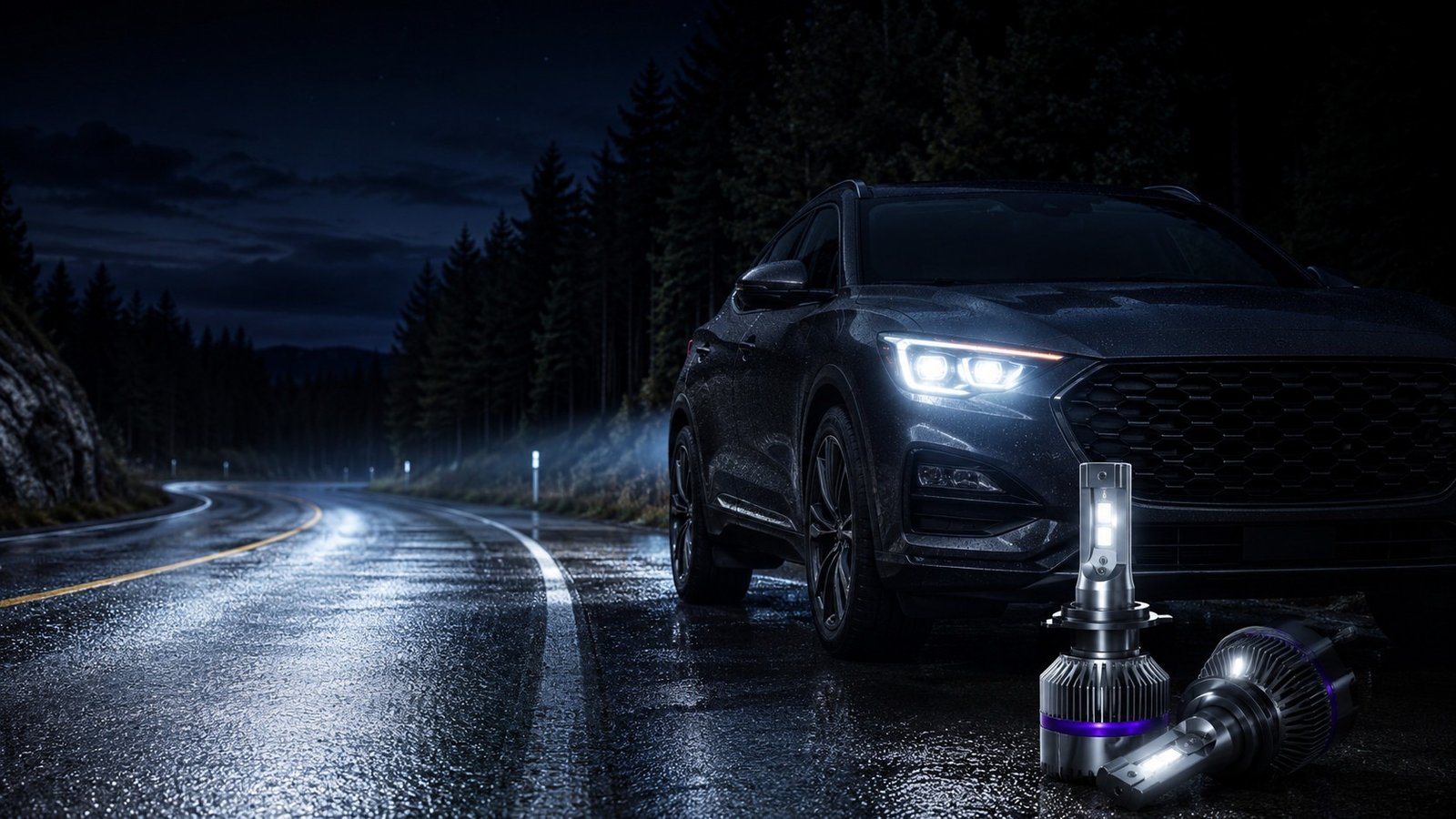
Driving at night on poorly lit rural highways or navigating urban streets in heavy rain requires maximum visual clarity. Yet millions of vehicles on the road still rely on factory halogen bulbs—a technology that hasn’t fundamentally changed in decades. Halogen bulbs produce a warm, yellowish light that dims significantly as the bulbs age, leaving drivers straining to see road signs, wildlife, and unexpected debris.
Upgrading your vehicle to LED (Light Emitting Diode) headlight bulbs is one of the most cost-effective and dramatic safety upgrades you can make. Modern LED conversion kits generate up to 300% more light output while consuming a fraction of the wattage, instantly giving your vehicle a modern look and superior nighttime visibility.
However, picking the wrong LED bulb can cause harsh glare for oncoming traffic, trigger error codes on your dashboard, or fail to fit inside your headlight housing. Here is everything you need to know to choose the perfect LED headlight bulb upgrade for your vehicle.
1. Confirm Your Vehicle’s Correct Bulb Size
Headlight bulbs are not one-size-fits-all. Vehicle manufacturers use specific bulb fitment types depending on the make, model, year, and trim level of your car.
Before ordering LED replacements, identify the exact socket sizes used in your headlight assembly:
- Single-Beam Bulbs: Common sizes include H11, H7, 9005 (HB3), and 9006 (HB4). Vehicles with single-beam systems use separate physical bulbs for low-beam and high-beam headlights.
- Dual-Beam Bulbs: Common sizes include H4 (9003) and H13 (9008). These single bulbs contain two internal filaments (or chip sets) to handle both low and high beams in one housing.
Pro Tip: Check your vehicle owner’s manual, inspect the stamp on your existing halogen bulb’s plastic base, or check the markings stamped onto the front lens of your headlight assembly to confirm fitment.
2. Choose the Ideal Color Temperature (Kelvin Rating)
The color of the light emitted by an LED bulb is measured on the Kelvin (K) temperature scale. Selecting the right Kelvin rating ensures a balance between stylish aesthetics and functional night vision:
- 3,000K (Golden Yellow): Ideal for fog light applications. Yellow light cuts through fog, heavy rain, and snow without creating glare reflectiveness.
- 6,000K–6,500K (Cool White): The sweet spot for main headlights. This crisp, daylight-white color closely mirrors natural sunlight, causing less eye fatigue while illuminating street signs and lane markings with high contrast.
- 8,000K+ (Blue/Purple): While visually striking, bulbs above 8,000K actually produce less usable illumination on the road surface and can attract unwanted law enforcement attention.
3. Prioritize 1:1 Beam Pattern Accuracy Over Raw Brightness
A common mistake when buying LED bulbs is focusing solely on raw lumen ratings. A 20,000-lumen bulb is useless if the light scatters wildly into the sky or blinds oncoming drivers instead of hitting the pavement where you need it.
When selecting an LED bulb, choose design configurations that feature a 1:1 Halogen Filament Match. High-quality LED conversion bulbs position ultra-thin CSP (Chip Scale Package) LED chips in the exact focal point where the original halogen filament sat. This preserves your headlight housing’s natural cut-off line, giving you maximum down-road projection without scattering uncontrolled glare.
Shop 1Auto.club: Enhance nighttime visibility and road styling with our high-clarity Headlight Film & Scratch Protection Pads to keep your front lenses crystal clear.
4. Cooling Systems: Fan vs. Fanless Designs
LEDs generate heat concentrated at the base of the circuit board. To maintain a long operational lifespan (often rated above 30,000 to 50,000 hours), that heat must be dissipated efficiently:
- Internal High-Speed Cooling Fans: Active fan cooling uses tiny, high-RPM turbofans built into the bulb base. This design allows for higher-wattage, ultra-bright output in compact spaces.
- Passive Heat Sink Belts: Fanless designs use solid aluminum body heat sinks or flexible copper braids. They are completely silent, maintenance-free, and ideal for tight headlight housings where fan clearance is limited.
5. Check for CANBus & Error-Decoder Compatibility
Modern vehicles rely on an onboard Computer Area Network (CANBus) system to monitor bulb functionality. Because LED bulbs draw significantly less wattage than standard halogen bulbs, your car’s computer might mistakenly think the bulb is burnt out.
This can result in:
- “Bulb Out” warning messages popping up on your dashboard display.
- Rapid hyper-flashing of the lights.
- The LED lights flickering or shutting off automatically after a few seconds.
The Solution: Look for LED bulb kits equipped with Built-In CANBus Drivers or integrated anti-flicker decoders. These units equalize current draw, guaranteeing 99% plug-and-play compatibility with complex vehicle electronics.
6. Protect Your Headlight Housings from Aging
Upgrading your bulbs won’t give you full brightness if your plastic headlight lenses are yellowed, hazy, or heavily pitted by road debris. Clouded lenses diffuse light beams, reducing night vision performance significantly.
Paired with bright LED bulbs, clean lenses ensure that light transfers cleanly to the road surface.
Shop 1Auto.club: Complement your lighting setup and maintain night driving clarity using our Car Anti-Scratch Protective Film & Lens Covers.
Headlight Upgrade Summary & Checklist
Before upgrading your headlights, keep this quick checklist in mind:
- [ ] Verify your vehicle’s specific bulb fitment size (H11, 9005, H4, etc.).
- [ ] Select a cool-white 6000K–6500K color temperature for optimum night contrast.
- [ ] Verify the bulb uses thin CSP chips with an OEM-style 1:1 beam pattern.
- [ ] Ensure the bulb base includes active fan or heat-sink cooling for durability.
- [ ] Choose CANBus-compatible bulbs to prevent dashboard error lights.
- [ ] Clean or protect outer headlight lenses to maximize light transfer.
Upgrading your halogen headlights to high-performance LEDs dramatically improves nighttime road safety, helps you react faster to hazards, and gives your car a clean, modern look.